
Homelessness is often framed as a local or national issue. In reality, it is a global crisis driven by multiple root causes.
Estimates from UN-Habitat and the Institute of Global Homelessness suggest that at least 330 million people worldwide experience absolute homelessness, with broader definitions indicating even higher numbers. Yet without a shared global definition and consistent data, the scale remains invisible in international policy, and largely absent from development and climate agendas, despite the extreme vulnerabilities of people experiencing homelessness.
Why Homelessness Matters for Global Development
Homelessness is not just a housing issue; it is a barrier to progress across multiple SDGs. Safe, stable, and affordable housing is foundational to well-being. Without it, people struggle to access education, sustain health, or engage in decent work, undermining progress on goals including:
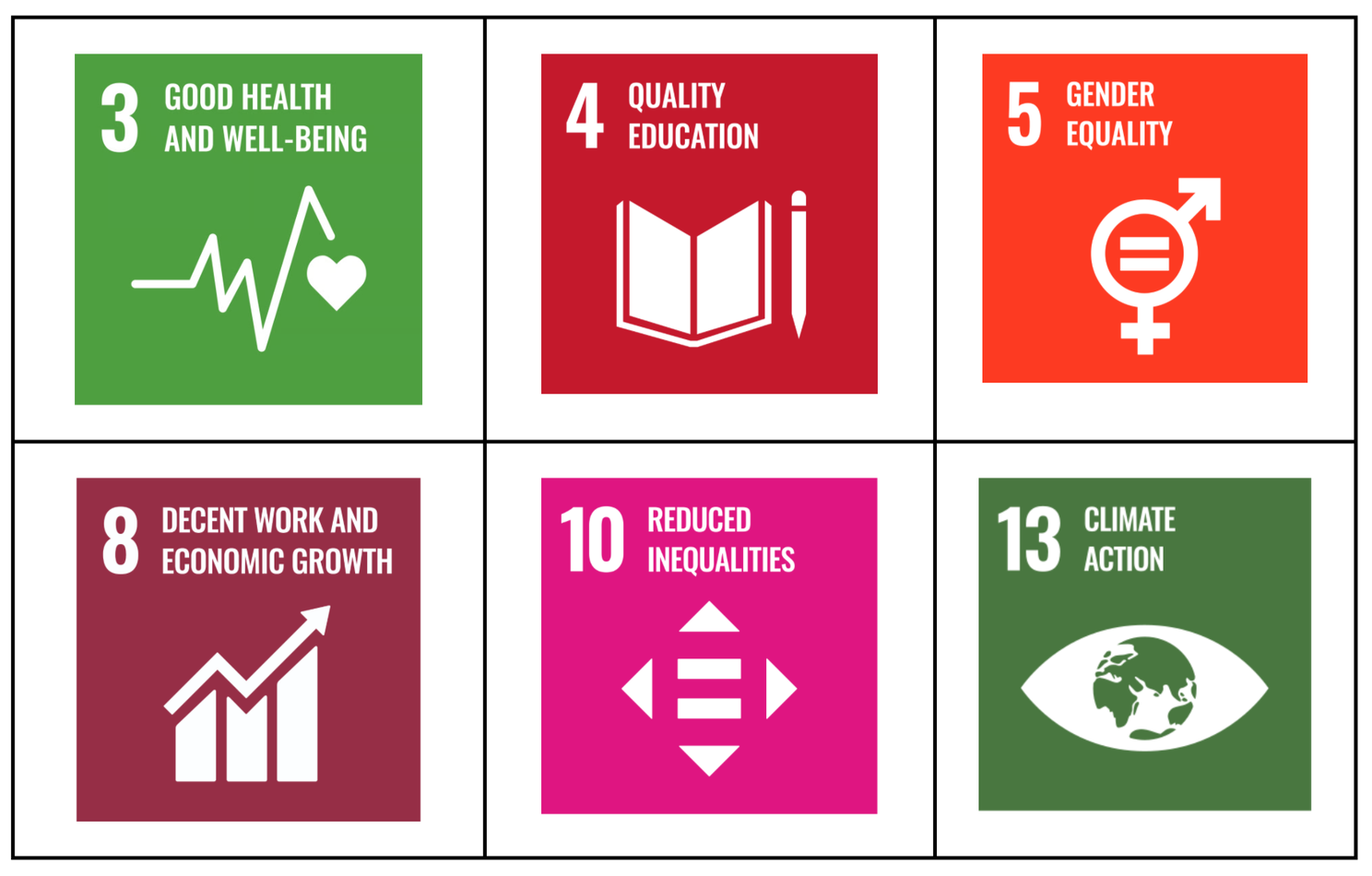
Too often, development programmes target education, health, or climate without recognising that the benefits of these interventions are diminished, or even undone, when people lack access to safe, stable and long-term housing because they are most vulnerable to the impact and burden of health and climate crises as well as limited access to education.
Three Key Intersections: Health, Climate, and Education
The Case for Action on Global Homelessness explores how homelessness intersects with three major global priorities:
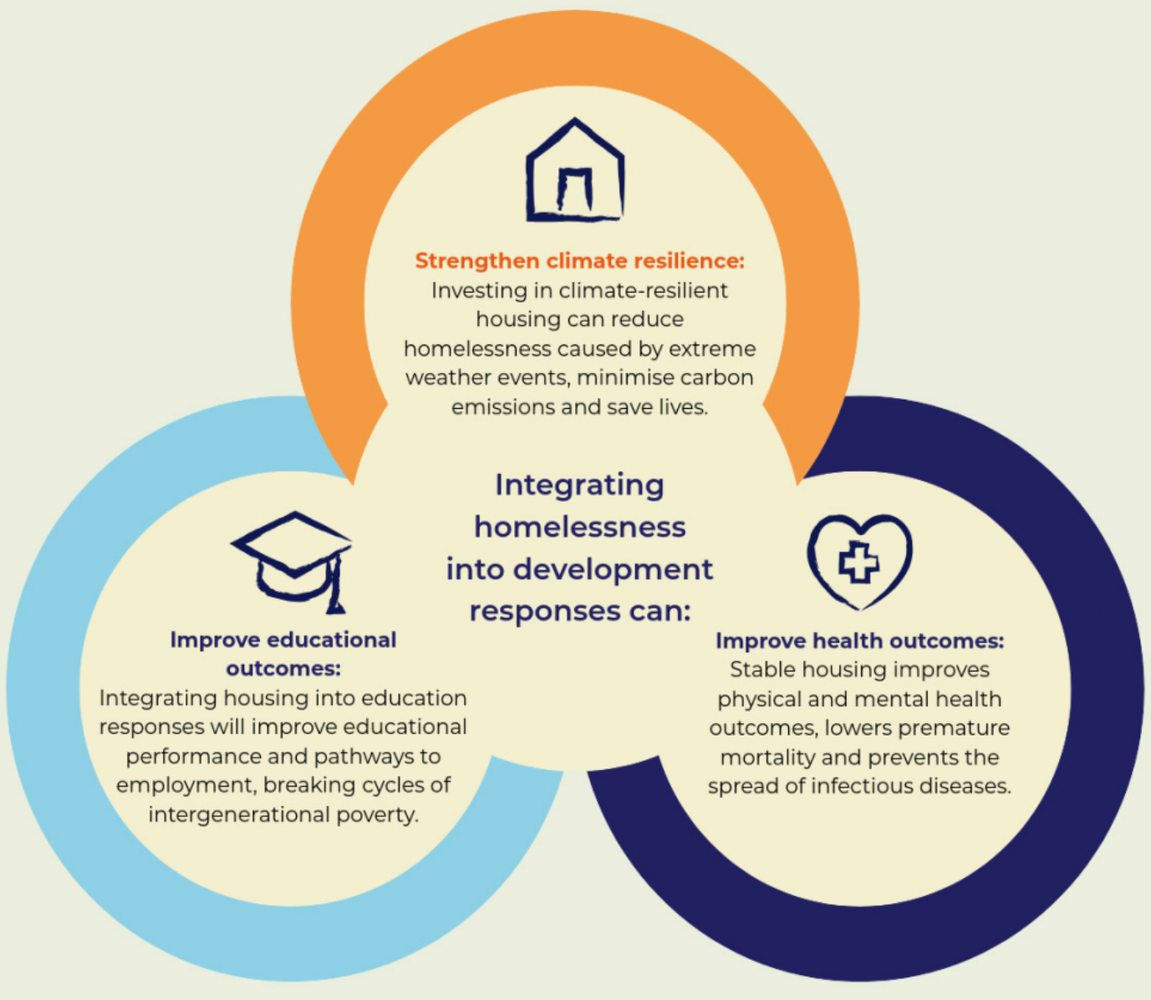
- Global Health: People experiencing homelessness face dramatically poorer health outcomes, including higher mortality rates, mental health & substance abuse rates, and greater exposure to communicable and non-communicable diseases. Stable housing, in contrast, improves health outcomes and reduces the burden on health systems.
- Climate Change: People without stable homes are among the most vulnerable to climate impacts, including extreme heat, air pollution, flooding, and displacement. Yet climate adaptation and resilience strategies often overlook this population’s specific vulnerabilities.
- Education: Children and youth experiencing homelessness face severe barriers to consistent schooling, undermining lifelong learning opportunities and perpetuating cycles of disadvantage.
Across each of these areas, the evidence shows that homelessness both contributes to poor outcomes and undermines the effectiveness of policies unless it is explicitly accounted for, and therefore clear opportunities exist through cross-sectoral solutions:
Funding Homelessness: A Stark Reality
This report presents the first analysis of international development and philanthropic funding dedicated to homelessness, and the findings are stark.
- In 2023, Official Development Assistance (ODA) targeting housing-related activities amounted to less than 0.09% of total ODA, and this figure has declined over the five years from 2019–2023.
- Across the same period, just 9% of philanthropic funding for relevant activities explicitly referenced homelessness.
While some housing investments may indirectly reduce homelessness, these figures reflect a significant lack of global attention and coordination.
Evidence-Based Solutions Exist, and They Work
There is no shortage of effective, evidence-based approaches to preventing and reducing homelessness. Across diverse contexts, models like Housing First, consistently show that rapidly scaling up access to safe, decent, affordable housing , especially for people experiencing or at risk of homelessness, is one of the most cost-effective foundations for long-term social and economic inclusion.
These strategies not only improve individual lives, they reduce pressure on health systems, social protection mechanisms, and emergency services, generating benefits across sectors.
Development banks, climate finance institutions, and donors have a vital role to play, particularly in supporting affordable and climate-resilient housing in Low- and Middle-Income Countries. Yet these instruments are currently under-utilised for homelessness prevention and eradication.
What Global Action Could Unlock
Other global priorities, such as women’s rights and child survival, were once peripheral in development frameworks, also previously deemed domestic issues for national and local governments to solve. Through persistent advocacy and evidence-based action, they are now embedded across policy, financing, and implementation.
Homelessness deserves the same attention. Integrating it across global agendas, from health and education to climate and economic development, would enable funders and policymakers to reach marginalised populations more effectively and sustainably.
A Call to Action: Strategic Priorities
This report calls on governments, development agencies, philanthropies, and other stakeholders to respond to the UN Secretary-General’s call for a global agenda on homelessness. It identifies six strategic priorities:
- Explicitly recognise homelessness as a development priority in international strategies and frameworks.
- Strengthen global and national data on homelessness to ensure consistent definitions, comparable measurement, and reliable monitoring.
- Restore and increase funding for the housing sector, prioritising accessible and affordable solutions for people experiencing or at risk of homelessness.
- Target funding more effectively in areas closely linked to homelessness — including climate adaptation, global health, and education.
- Align climate finance with homelessness prevention by investing in climate-resilient, affordable housing and protecting those most vulnerable to climate change.
- Use development finance to mobilise private capital for affordable and supportive housing solutions that reduce homelessness.
Moving From Short-Term Fixes to Sustainable Change
Homelessness is preventable and solvable, but only if we act deliberately, cooperatively, and with the scale that the evidence demands. Governments, donors, development banks, philanthropies, NGOs, faith-based organisations, and the private sector can all play vital roles in creating lasting solutions.
Without coordinated global action, responses will continue to focus on short-term fixes, leaving millions of vulnerable people without the stability, dignity, and opportunity that housing provides.
The solutions are known. The evidence is clear. What’s needed now is momentum, leadership, and commitment to ensure that no one is left behind.
Related posts



Let's work together
Book a consultation by completing the form below.